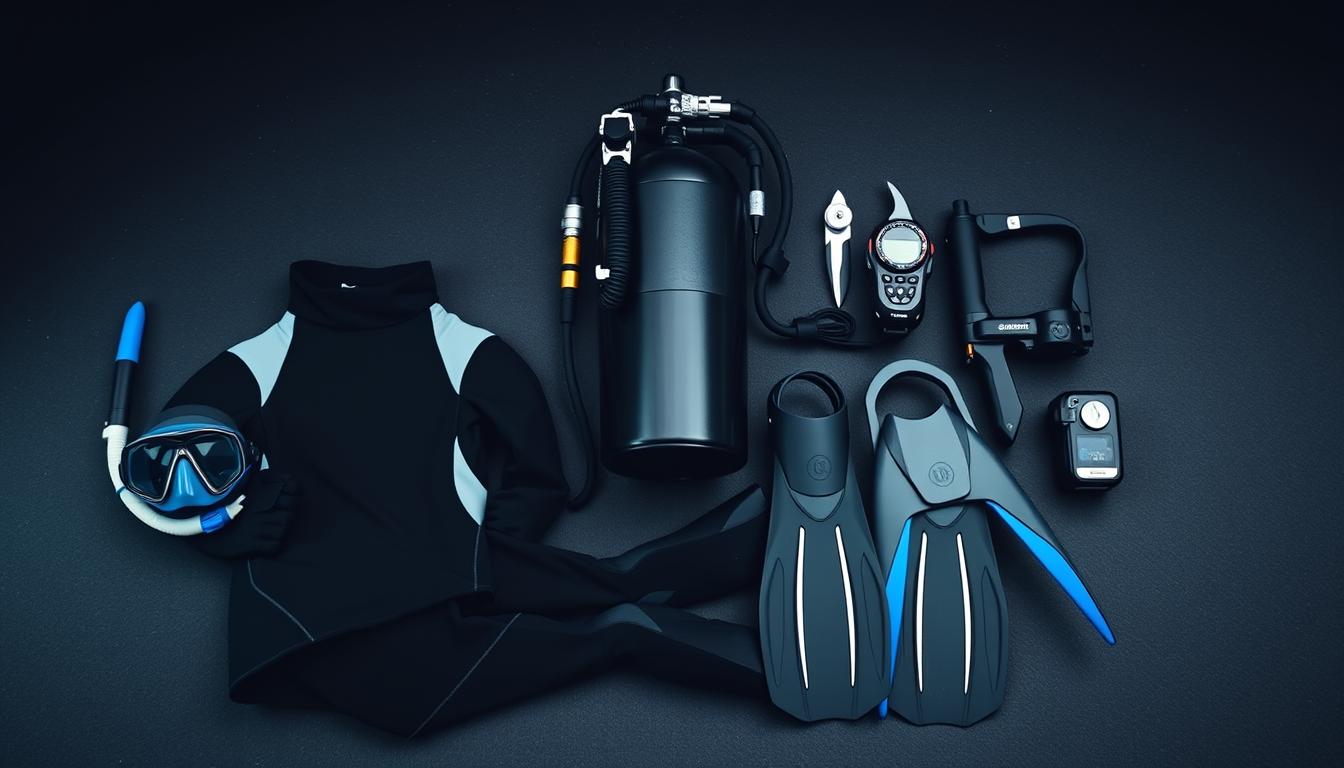
Diving lets you explore under the sea, from bright reefs to cool shipwrecks. Picking the right gear is key for safety and fun underwater. This guide looks at the must-have diving gear for newbies. It helps you pick based on your dive spot, how much you dive, and if you travel. It also talks about choosing gear that fits your growing skills.
Key Takeaways
- Essential gear for beginner divers includes high-quality masks, fins, dive computers, wetsuits, and dive bags.
- Consider where you will be diving and how often when selecting your equipment.
- Your gear should be comfortable, durable, and suitable for your specific diving needs.
- Invest in versatile equipment that can grow with your diving skills.
- Understanding the importance of each piece of gear will enhance your overall diving experience and safety.
Introduction to Scuba Diving Gear
Scuba diving gear is very important when exploring underwater. It gives you air to breathe, lets you move well, and see clearly. For beginners, there’s gear made just to keep them safe and make diving fun. There’s a list of must-have gear that includes masks, fins, wetsuits, dive computers, and Buoyancy Control Devices (BCDs).
Every item on this list has a special job. Masks let you see clearly under the water. This way, divers can see the beautiful ocean life and find their way. Fins help divers move easier, which is handy against the water’s push. Wetsuits keep you warm in cool waters, and BCDs help you float just right at any depth.
Dive computers are super helpful too. They track how long and deep you dive. They ensure you come up at a safe speed. This is especially important for new divers to know. Knowing about each piece of gear makes diving better and safer for beginners.
Choosing the right gear can really boost your diving trips. The essential gear list helps beginners dive safely and be ready for anything under the water. This guide on scuba diving gear shows how crucial it is for a fun and safe diving trip.
Questions to Ask Before Buying Diving Gear
Before you buy scuba gear, think about what you really need. What will make your dives great? Here are important questions to help you pick the right stuff. These tips are for anyone new to diving.
Where Are You Diving?
Where you dive changes what gear you need. Warm water? You’ll want a light wetsuit. Cold water? You need a thicker one to stay warm. The right gear makes sure you’re comfy and safe under the sea.
How Often Will You Dive?
How much you’ll dive is key. Diving a lot? Buying your own gear makes sense. It saves money over time. If you dive just now and then, renting might be better. Use your money for other cool diving stuff.
Travel Preferences
Think about how you like to travel. Travel a lot? Go for gear that’s light and easy to carry. This makes traveling easier. You won’t have to deal with heavy stuff.
Scuba Diving Mask
A good scuba diving mask is key for diving. It makes seeing underwater better and diving comfy. When picking a mask, think about style, material, how it looks, and its fit.
Recommended Mask
The Oceanic Shadow mask is loved by many. It’s light and fits well, good for all divers. It has no frame, so you see more underwater.
Dive Watch (Computer)
When diving, it’s vital to have tools that are correct and reliable. They should monitor your depth, dive time, and how fast you come up. The SUUNTO Zoop Novo is a great choice for starters. It has what you need without costing too much.
Top Pick for Dive Computer
The SUUNTO Zoop Novo is top-notch because it’s easy to use. It also analyzes your dive in detail. It’s a must-have in your dive gear for many reasons.
- Five modes: air, nitrox, gauge, free, and off.
- Easy-to-read display: Clear LCD screen shows key dive info right away.
- Efficient data logging and retrieval: Connects to a PC or Mac. You can download and look at dive logs with SUUNTO’s special software.
This versatile dive computer makes diving better and safer. It’s key in stopping decompression sickness. It does this by giving real-time updates and warnings.
Fins for Beginners
Choosing the right fins is key for beginners to move well underwater. They help you swim better and make your dive fun. Here, we’ll look at important things to think about and suggest some great fins for new divers.
Recommended Fins
It’s key for beginners to pick fins that feel good and help them swim easily. Here are some good ones:
- Leaderfins Composite Fins: These are great for their price and work for new or somewhat experienced freedivers. They mix good performance with a fair cost.
- Cressi Gara: These are the softest and most comfy plastic fins for freediving, great for beginners who want comfort.
- Seac Motus: These fins don’t cost much and are perfect for those looking for good performance without spending too much.
- DiveR: Good for freedivers with a bit more experience, but also a solid choice for beginners wanting quality gear.
Each fin type has its own special features, offering choices based on what you need and how much you can spend.
Factors to Consider
When picking fins, think about a few important things:
- Level of Freediving: Your diving experience matters. Beginners might start with plastic fins like the Cressi Gara, then try composite or carbon ones as they get better.
- Budget: Know how much you want to spend. Fins like the Seac Motus are good but won’t empty your wallet.
- Travel Preferences: Think about how you’ll carry your fins. If you travel a lot, lighter, sturdy fins are better.
- Training Environment: Where you train or dive changes what fins are best. Fins like the Leaderfins Composite work well in many places.
Knowing these things helps you choose the best snorkeling gear. This way, your underwater trips are fun and easy.
Wetsuits for Different Water Conditions
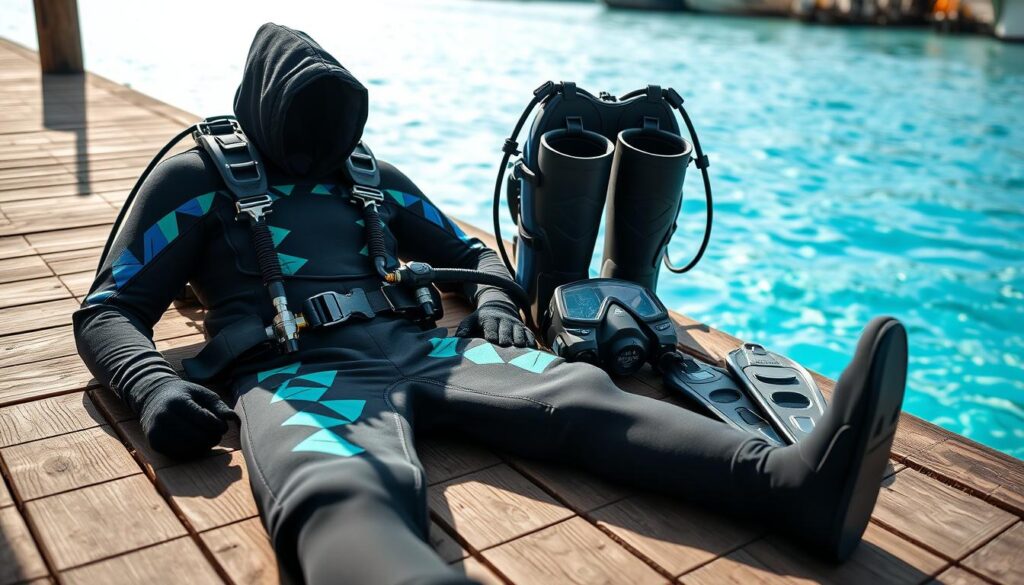
Choosing the right wetsuit is essential, especially for new divers. As important scuba diving gear for novice divers, wetsuits keep you warm and safe in different waters.
Choosing the Right Thickness
Wetsuits vary in thickness from 3mm to 7mm. The thickness is key to keeping warm underwater. Let’s look at what thickness might be right for you:
- 3mm: Perfect for warm tropical waters, over 75°F (24°C). It keeps you warm but not too hot.
- 5mm: Good for water that’s a bit cooler, between 60°F (16°C) and 75°F (24°C). It’s warm and flexible.
- 7mm: Great for the coldest waters, between 45°F (7°C) and 60°F (16°C). It gives the most warmth for longer dives.
Think about the water temperature where you’ll dive and the time of year. You should also try on different brands and styles. A snug fit is a must for comfort and to keep warm. Having the right scuba diving gear for novice divers makes diving safer and more fun.
Surface Marker Buoy (SMB)
Making sure you can be seen while on the surface is key for diver safety. This is why a Surface Marker Buoy (SMB) is so important. SMBs are top gear for diving because they make it easy for boats and rescuers to spot you.
Importance of Surface Marker Buoy
SMBs are super important in areas with lots of boats or strong currents. They let divers tell surface crews where they are. This helps avoid dangers. Plus, some places make you have one to dive there, showing they’re really important.
There are many kinds of SMBs to fit different diving needs and skills. If you’re new to diving, start with an open-ended SMB. It’s easy to use. More experienced divers might like a self-sealing SMB better. These are stable and easy in tough conditions.
Adding an SMB to your diving gear improves safety and fun. It’s a simple tool, but it makes sure people can always see you.
Dive Bag Essentials
Having a trustworthy dive bag is a must for your essential scuba gear list. It keeps your gear safe and helps you move it around easily. There are many kinds to choose from. It’s key to pick one that suits what you need.
Recommended Dive Bag
The Cressi Tuna bag is a top choice because it’s big and tough. It has room for everything you need like your mask, fins, and wetsuit. Let’s look closer at it:
| Feature | Details |
|---|---|
| Material | Heavy-duty nylon |
| Capacity | 85 liters |
| Dimensions | 31.5″ x 15.75″ x 15.75″ |
| Compartments | Main compartment with side pockets |
| Straps | Padded shoulder straps |
Additional Storage Options
Think about getting extra bags and pouches too. Mesh bags, dry bags, and small pouches are great. They keep things like regulators and your stuff in order. This makes sure everything from your essential scuba gear list is easy to find and safe.
Finishing Touches: Accessories Worth Having
Having the right accessories can really improve your diving. They add utility and safety to your gear. Let’s talk about some key accessories every new diver should have.
Must-Have Accessories
Dive lights are a must, particularly in dark underwater spots. They light up the way and help signal your diving buddy. A dive knife is also important. It can cut through underwater stuff that might trap you.
A dive compass is another essential tool. It helps you find your way underwater. This is crucial for safety and when you want to explore. In places where it’s hard to see, a compass keeps you from getting lost.
Adding these accessories to your dive kit makes a big difference. They help you get around, stay safe, and talk to your dive buddy underwater.
These accessories do more than just make things easier; they help make sure your diving is safe and fun.
Conclusion
Starting your scuba diving journey is exciting and tough. Picking the right beginner’s gear is key for safe and fun dives. This guide showed you important gear, with tips for new divers. Buying items like a dive mask, watch, fins, or wetsuit? Choosing well can make your dives better.
Each beginner’s diving item has an important job. Know your dive spots, how often you dive, and your travel needs. This helps you buy smart. Look for gear that’s safe and fits your budget. Your dives will be more rewarding.
The underwater world is full of surprises. The right gear makes exploring it better. Choose your beginner’s diving equipment wisely. Great gear leads to great adventures. Remember, good gear is key to a great dive. Get the right equipment, dive safely, and love every underwater moment.