
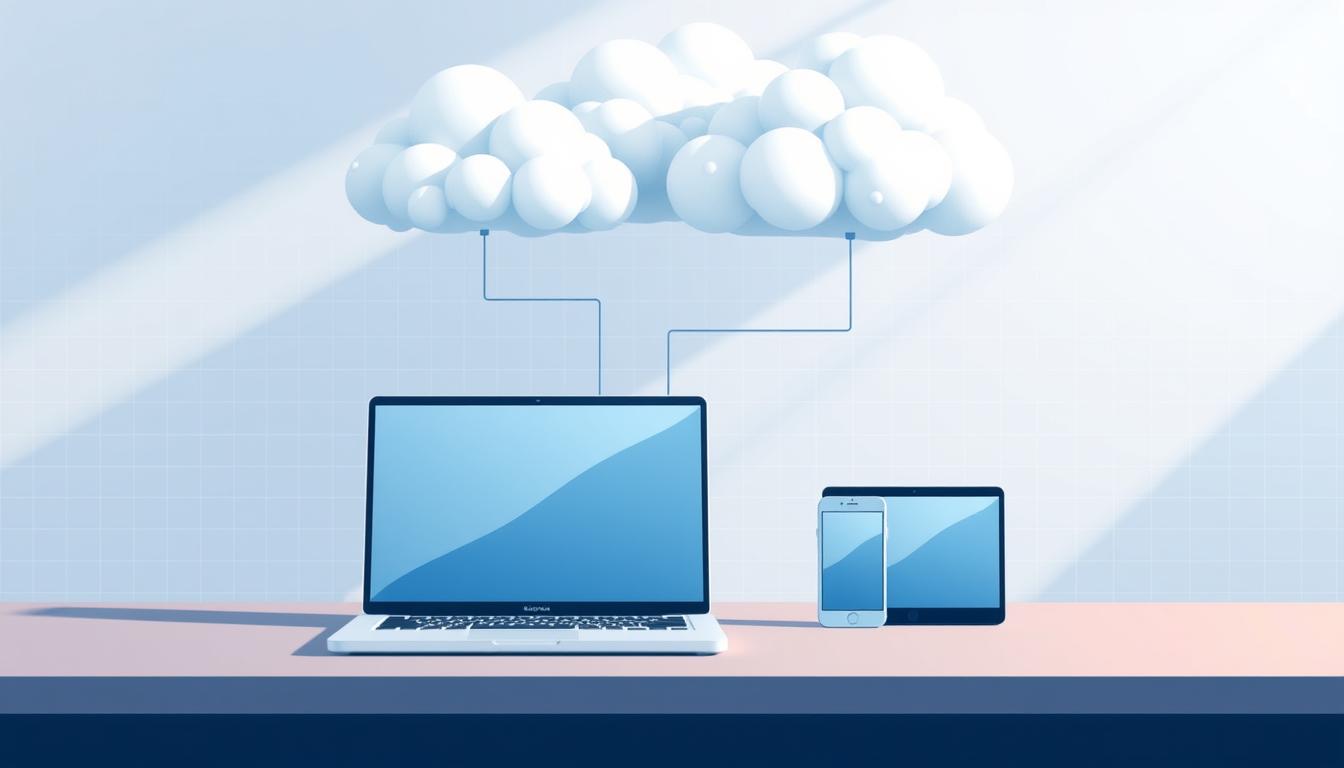
Cloud computing is now a key part of today’s digital world. It changes how we store, get, and process data. By getting rid of physical servers, it gives scalable and flexible options. With cloud services, storing files, teaming up in real-time, and using strong computing stuff from afar is easy. This makes it great for saving money and working better, for both personal and business needs. This guide helps anyone understand and use cloud computing well.
Key Takeaways
- Understanding the basics of cloud computing.
- The significance of scalable and flexible cloud solutions.
- Cost-effective advantages of cloud services for personal and business use.
- Importance of remote access and real-time collaboration.
- Cloud computing fundamentals to efficiently leverage technology.
What is Cloud Computing?
Cloud computing is a big deal today. It changes how we keep, handle, and process data. A quick look into cloud computing shows it’s about getting different services on the internet. We’re talking servers, storage, databases, networks, software, analytics, and more.
Definition and Basics
Cloud computing means getting computing services online. Not from local servers or personal gadgets. It brings quicker innovation and flexible resources. You only pay for what you use. Knowing the cloud shows it can give services right when needed. It cuts down the work and cost of keeping hardware.
Key Concepts
A few main ideas are important for cloud computing to work well:
- Virtualization: Making virtual versions of real resources. This makes things more efficient.
- Cloud Storage: A way to keep data safe and easy to get to from anywhere online.
- Cloud Security: Strong steps to keep data, apps, and setups safe from dangers.
- Cloud Data Management: Good handling of data in different places within the cloud.
To get the cloud, you need to know these ideas. They help different fields use cloud services. This allows businesses to grow and innovate better.
Types of Cloud Computing
Cloud computing falls into three main kinds: public, private, and hybrid clouds. These kinds suit different needs based on their setup and who can use them.
Public Cloud
The public cloud is run by outside companies. They give computing services online to anyone willing to pay. Big names like Amazon Web Services (AWS), Google Cloud Platform, and Microsoft Azure back it up. This option is good for its flexibility and helps save money.
Private Cloud
A private cloud is for just one business. It can be kept onsite or elsewhere but is just for this company. It offers more safety and control. It’s perfect for firms needing custom IT jobs and must meet tough rules.
Hybrid Cloud
The hybrid cloud mixes public and private clouds. It uses tech that lets them share info and apps. It gives a mix of flexibility, saving funds, and extra safety. Businesses can use the public cloud for basic tasks but keep sensitive stuff in the private cloud.
Cloud Computing Service Models
It’s key to know the different Cloud Computing Service Models. They help use cloud power well. You can choose from three main types: Infrastructure as a Service (IaaS), Platform as a Service (PaaS), and Software as a Service (SaaS).
Infrastructure as a Service (IaaS)
Infrastructure as a Service (IaaS) gives computing resources online. It offers servers, storage, and networking that can be virtual or physical. Amazon Web Services (AWS) and Microsoft Azure are big names here. They provide infrastructure that is flexible and can grow as needed. IaaS lets companies skip the costs of physical servers and data centers.
Platform as a Service (PaaS)
Platform as a Service (PaaS) helps with app development and management. Companies don’t need to handle the base tech. This lets developers just focus on coding and delivering apps. Google Cloud Platform and Heroku are popular PaaS options. PaaS makes creating apps faster, reduces costs, and makes managing projects easier.
Software as a Service (SaaS)
Software as a Service (SaaS) provides software over the internet. There’s no need to install it. You can use these apps from any online device. This allows for great teamwork and flexibility. Salesforce, Microsoft Office 365, and Google Workspace are examples of SaaS. SaaS lets companies use software quickly, with less cost and easier updates.
Benefits of Cloud Computing
Understanding the benefits of using cloud services can help businesses make smart choices. We’ll look at the main perks of cloud computing now.
Cost-effectiveness
One top benefit of using cloud services is saving money. With cloud computing, companies don’t need to spend a lot on hardware upfront. They can also cut down on managing IT costs.
Scalability
Scalability is a big advantage of cloud services. Companies can change how much they use based on need. This helps them pay only for what they need and perform better.
Accessibility
Cloud services can be reached from anywhere if you have internet. This ease of access is a key benefit of using cloud services.
Security
Cloud services come with strong security measures to keep data safe. But, users must also follow good security steps for the best protection.
| Benefits | Details |
|---|---|
| Cost-effectiveness | Reduces need for significant investment in hardware and lowers IT management costs. |
| Scalability | Allows for easy adjustment of resources according to demand. |
| Accessibility | Provides access to data and applications from anywhere with an internet connection. |
| Security | Includes robust measures to protect against cyber threats, supplemented by user practices. |
A Beginner’s Guide to Cloud Computing
Starting your journey with cloud technology can really change things for people and businesses. This guide will make it easier to understand the basics. It’ll help you make good choices.
First, it’s key to know what cloud computing is all about. It gives you services like storage and processing power over the web. You don’t need physical servers. This makes things more flexible and simpler.
Knowing the types of cloud computing is important. There are three main kinds:
- Public Cloud: These services are on the public internet and used by many groups.
- Private Cloud: These services are on a private network. They offer more security and control.
- Hybrid Cloud: This is a mix of public and private clouds. It gives more flexibility and better use of resources.
Choosing the right cloud service model is also crucial. The options include:
- Infrastructure as a Service (IaaS)
- Platform as a Service (PaaS)
- Software as a Service (SaaS)
To start with cloud technology, you need to know what you or your business needs. Think about your budget, what technology you need, and what you want to achieve. For businesses, this means looking at your current IT, what you need to do your work, and planning for growth.
Planning how to use cloud solutions is very important too. This might mean training your team, making a plan to move your stuff to the cloud, and setting goals. You can then see how well things are going.
Starting with cloud technology involves many steps. But with careful planning, it can really improve how things work. It can help things run better, grow easier, and bring new ideas to life.
Top Cloud Computing Platforms
There are several top cloud computing platforms available. Each one serves different business needs. The main ones are Amazon Web Services (AWS), Microsoft Azure, Google Cloud Platform, and IBM Cloud.
Amazon Web Services (AWS)
Amazon Web Services offers over 200 services. It’s great for both small startups and big companies. AWS is known for being flexible, having lots of services, and a strong infrastructure.
Microsoft Azure
Microsoft Azure works well with other Microsoft products. It offers AI, databases, and tools for developers. It’s good for combining cloud with your existing systems.
Google Cloud Platform
Google Cloud Platform is known for data analytics and machine learning. It helps businesses handle big data. It also offers compute, storage, and networking for apps.
IBM Cloud
IBM Cloud is famous for its strong security and enterprise-grade services. It’s best for businesses that need to meet regulations. IBM Cloud has AI, blockchain, and more. It helps mix your current systems with the cloud.
Each platform has its own services and prices. It’s important to know what you need before choosing. These platforms can support different IT needs across many industries.
How Cloud Computing Works
Cloud computing lets you use huge computing resources easily and fast. It’s like having a supercomputer at your fingertips. This power comes from a well-designed setup.
Infrastructure and Data Centers
Cloud computing runs on a big network of data centers around the world. These places have the servers and storage for cloud services. Companies like Amazon, Microsoft, and Google use these centers.
They place these centers all over to make sure you get fast and reliable service. This setup helps avoid delays and improves your experience. It makes sure services and content come from the closest place to you.
Network and Connectivity
The connections in cloud computing are super important. They use fast links and smart tech to move data smoothly. This keeps data safe and gets it where it needs to go quickly.
There are special networks to meet different needs for security and speed. This strong network system lets you access cloud services from anywhere. It makes cloud computing work well for everyone.
Real-World Examples and Use Cases
Cloud computing is a big deal for businesses today. It offers smart solutions in many fields. This includes video streaming, shopping online, and keeping health records safe.
Video Streaming Services
Services like Netflix and Hulu depend on cloud computing to reach users everywhere. The cloud helps make streaming smooth. For example, Netflix uses Amazon Web Services to organize its shows and movies well.
E-commerce Websites
Big online stores like Amazon use the cloud to handle lots of orders every day. This helps them give shoppers a good experience, especially when it’s super busy. The cloud helps Amazon stay fast and reliable for its customers.
Healthcare Systems
In health care, cloud computing means better access and teamwork. It’s used to keep patient information safe but shareable. This helps doctors care for their patients better and quicker.
Cloud computing is changing many industries in wonderful ways. Want to learn more? Check out this resource for more on cloud computing in the real world.
Advantages and Disadvantages of Cloud Computing
Understanding the pros and cons of cloud computing is key for businesses thinking about moving to the cloud. Cloud computing has many benefits but also some downsides. Let’s look at the main advantages and disadvantages.
Advantages
One big plus of cloud computing is cost savings. Companies can cut their expenses by not having to own hardware. The scalability and flexibility of cloud services let companies change resources as needed. This makes them efficient and quick to respond. Another big plus is better teamwork. Cloud computing lets team members work together on projects from anywhere.

Disadvantages
Yet, weighing the pros and cons of cloud computing is important. One big downside is data security. Companies have to trust their cloud service to protect their data well. Risky security could lead to data leaks. Another issue is vendor lock-in. This happens when a company relies too much on one cloud service. It makes changing services or using different ones hard.
Another downside is limited control over cloud things. The cloud provider handles the tech stuff. But this can mean less freedom for companies to tailor things their way.
Knowing the pros and cons of cloud computing helps companies make smart choices about using cloud tech.
Conclusion
Cloud computing is changing many industries in big ways. It lets people use the internet to store and access information. This can save money and allow systems to grow or shrink as needed.
It also makes data more secure. When we look at Amazon Web Services, Microsoft Azure, and Google Cloud Platform, we see great options. These services are helping businesses and people a lot.
Video streaming, online shops, and healthcare show how cloud technology is used today. Knowing how cloud systems work helps users get the most out of this technology. It’s good to understand both the good points and the hard parts.
The future of cloud computing looks very exciting. We will see new mixes of public and private clouds. Also, AI and big data will get better, and security will be stronger.
These changes will make cloud services even more important in our digital world. Keeping up with these trends will help us make the best use of cloud computing.